
Imagine, for a second, that you’re driving down the I-95 at 70 miles per hour. The sun is out, the music is up, and you’re feeling good. But there’s one catch: your windshield is painted completely black. To navigate, you have to rely entirely on your rearview mirror.
You can see where you’ve been perfectly. You can see the potholes you already hit, the exit you missed three miles back, and the flashing lights of the state trooper you definitely just passed. But you have absolutely no idea what is happening ten feet in front of your bumper.
Most small business owners operate their companies exactly like this.
In the world of traditional bookkeeping, we call this "Rearview Mirror Accounting." You wait until the end of the month, send your receipts to a bookkeeper, and then, somewhere around the 15th or 20th of the following month, you get a set of financial statements telling you how you did four weeks ago.
By the time you see the data, the "car" has already moved on. In 2026, where the market moves at the speed of a fiber-optic connection, "last month’s data" is practically ancient history. This is why real-time accounting services for small business aren't just a luxury anymore; they are the GPS you need to keep from driving off a cliff.

Visual: A business owner looking intently at a rearview mirror while the road ahead is full of opportunities and obstacles.
The Fatal Flaw of the 30-Day Lag
The problem with traditional, reactive bookkeeping isn't just that it’s slow, it’s that it forces you to make guesses. When you don't have a clear, real-time view of your numbers, you start relying on "bank balance accounting." You check your phone, see $50,000 in the business checking account, and think, "Great! We’re killing it. Let's sign that new lease."
But that bank balance is a liar. It doesn't show the $15,000 in checks that haven't cleared, the $10,000 tax payment due next week, or the fact that your highest-paying client is 60 days late on their invoice. We call this The Bank Account Mirage, and it’s the primary reason 29% of startups fail—they simply run out of cash while thinking they’re doing just fine.
When you operate in the rearview mirror trap, you are:
- Reactive, not Proactive: You’re fixing problems that happened weeks ago instead of preventing them.
- Stressed by Uncertainty: You’re never quite sure if you can actually afford that new hire or that equipment upgrade.
- Inundated with "Ghost Expenses": Small subscriptions and leaks stay in your system for months before you even notice they’re draining your profit.
(Note: Check out our previous post on
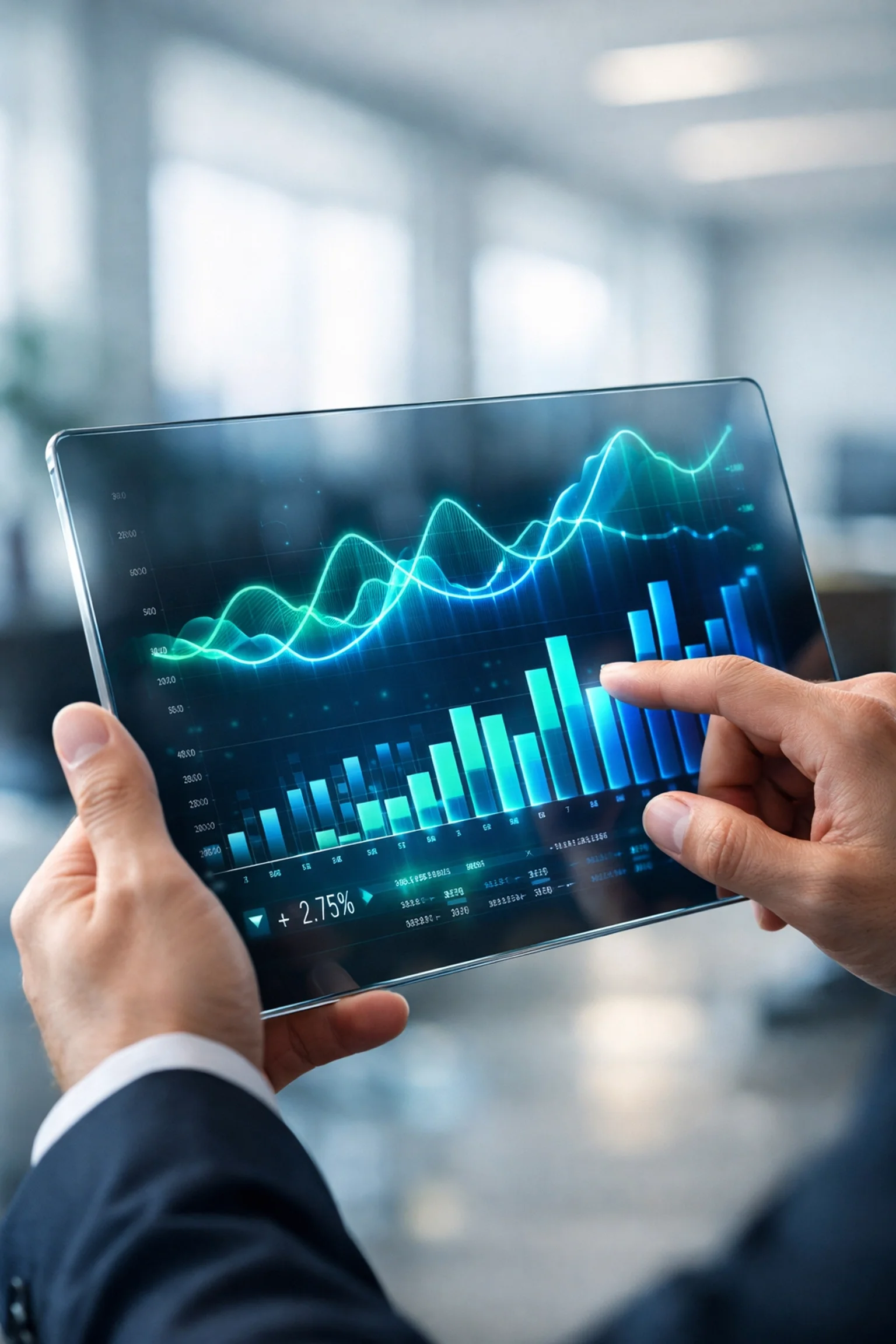
So, what does it look like when you scrape the black paint off the windshield? Real-time small business accounting leverages 2026 technology, automated bank feeds, AI categorization, and integrated POS systems, to give you a live dashboard of your financial health. Instead of waiting for a PDF report on the 20th, you can see your margins, your burn rate, and your accounts receivable today. Visual: A sleek, modern digital dashboard showing live financial metrics. The "Real-Time" advantage changes the way you interact with your business in three specific ways: In the old days, if a marketing campaign was a total dud, you wouldn’t realize it until your P&L came back 45 days later showing a massive spike in ad spend with no corresponding bump in revenue. With real-time visibility, you can see that discrepancy in week one. You can kill the loser and double down on the winner before you’ve wasted thousands of dollars. We’ve all been there, paying for a software seat for an employee who left six months ago. In a reactive model, these ghost expenses blend into the background. In a real-time model, your advisor catches the anomaly the moment it hits the ledger. Real-time data allows us to build a "forward-looking" model. Instead of telling you what you spent, we can tell you what you’ll have in ninety days. This is the difference between sleeping soundly and staring at the ceiling at 3:00 AM wondering if payroll is going to clear. When your accounting is live, your role shifts from "Technician" to "CEO." You stop asking "What happened?" and start asking "What’s next?" This shift is vital when you hit The Scale Wall, that point where your business is too big for you to manage by "gut feeling" alone. One of the scariest decisions a small business owner makes is adding headcount. It’s a massive fixed cost. If you're looking in the rearview mirror, you hire because you "feel busy." But busy doesn't always mean profitable. Real-time accounting shows you exactly when your revenue-per-employee justifies a new hire, and more importantly, if your cash reserves can handle the ramp-up period. Should you buy that new piece of equipment now or wait until Q3? If you have real-time data, you can run a "what-if" scenario. You can see how that depreciation will affect your tax strategy and how the monthly payment impacts your "Cash Gap"—the time between paying for materials and getting paid by the customer. Scaling a business is like adding a turbocharger to an engine. If the engine has a tiny crack in the block, the turbo will make it explode. Reactive accounting rarely catches those "cracks" (like eroding margins or rising customer acquisition costs) until it’s too late. Real-time data lets you monitor the "Financial Vital Signs" of your business as you accelerate. Visual: A business owner standing in front of a mountain peak, looking at a clear path forward with a compass in hand. Now, you might be thinking, "Can’t I just plug my bank account into a fancy AI app and get this for $20 a month?" It’s a tempting thought, but there’s a reason The Opportunity Cost of DIY is so high. AI is great at recording data, but it’s terrible at understanding context. A bot can tell you that you spent $500 at a restaurant. It can't tell you if that was a personal meal you accidentally put on the business card (a major audit risk) or a strategic dinner with a lead that resulted in a $50,000 contract. At High Point Accounting & Advisory, we use the best tech of 2026 to handle the "grunt work" of data entry so that our experts can focus on the strategy. It’s the same shift we talk about in our Moving Beyond Month-End post: getting out of reactive reporting and into forward-looking decision-making. We aren't just "doing your books"; we are your navigators. We look through that cleared windshield and say, "Hey, there’s a curve coming up in two miles: we should probably gear down now." The "Rearview Mirror Trap" is a comfortable place because it’s what most business owners have always known. But in a competitive landscape, the person with the clearest view of the road ahead is the one who wins. Switching to real-time accounting services for small business isn't just about changing software; it’s about changing your mindset. It’s about moving from a state of "financial gaslighting"—where you’re constantly surprised by your own numbers—to a state of financial authority. If you're looking for a partner that combines strategic advisory with modern, audit-ready bookkeeping, explore High Point Accounting & Advisory’s services to see how we help small businesses build cleaner systems and make sharper decisions. See how we can Support You Toward Your Financial High PointThe Real-Time Advantage: Spotting Trends as They Happen
1. The Power of Pivot
2. Identifying "Zombie" Expenses
3. Accurate Cash Flow Forecasting
How Real-Time Data Changes Your Decision-Making
Hiring with Confidence
Strategic Spending
Scaling Without Breaking

The "Human Pilot" in an AI World
Stop Looking Backwards
Are you ready to stop wondering where your money went and start deciding where it’s going to go?
