How to Automate Small Business Bookkeeping and Reclaim 10+ Hours a Month

Let's be honest: you didn't start your business to spend your evenings categorizing receipts and reconciling bank statements.
Yet here you are, Sunday night, laptop open, trying to figure out why your books are off by $47.23. Again.
If that sounds familiar, you're not alone. Most small business owners spend anywhere from 5 to 15 hours a month on bookkeeping tasks that could be almost entirely automated. That's time you could spend landing new clients, improving your product, or (here's a wild thought) actually taking a day off.
The good news? Modern FinTech has made it ridiculously easy to automate the tedious stuff. And we're not talking about expensive enterprise software; we're talking about tools that are affordable, user-friendly, and designed specifically for small businesses like yours.
Let's break down exactly where your time is going and how to get it back.
Where Are Those 10+ Hours Actually Going?
Before we fix the problem, let's name it. Here's a typical breakdown of where small business owners lose time on manual bookkeeping:
| Bookkeeping Task | Manual Time (Est.) | With Automation |
|---|---|---|
| Categorizing Transactions | 4-6 hours / mo | ~10 mins |
| Chasing & Uploading Receipts | 2-3 hours / mo | Instant |
| Invoice Follow-up (A/R) | 2-3 hours / mo | Automated |
| Bank Reconciliations | 1-2 hours / mo | Real-time |
| Payroll Administration | 1-2 hours / mo | 1-click sync |
Add it up, and you're easily looking at 10-15 hours a month on tasks that software can handle in minutes.
The kicker? Manual processes aren't just slow, they're error-prone. Every typo, every miscategorized expense, every forgotten receipt creates a ripple effect that makes tax season way more painful (and expensive) than it needs to be.
The Automation Mindset Shift
Here's the thing about bookkeeping automation: it's not about replacing human judgment. It's about eliminating the repetitive, low-value tasks so you (or your bookkeeper) can focus on the stuff that actually requires a brain.
Think of it this way:
- Manual bookkeeping = You doing data entry like it's 2005
- Automated bookkeeping = Software handles the grunt work; humans handle the strategy
The goal isn't to remove yourself from your finances entirely. It's to stop spending your time on tasks that a robot can do better, faster, and without complaining.
The 5 Automation Strategies That Actually Move the Needle
1. Connect Your Bank Feeds (and Stop Manual Entry Forever)
This is the single biggest time-saver, and it's shockingly simple.
Modern accounting platforms like QuickBooks Online, Xero, and FreshBooks allow you to connect your bank accounts and credit cards directly. Once connected, the software automatically pulls in every transaction, daily.
No more logging into your bank, downloading CSVs, and manually entering transactions. The software does it for you, in real-time.
Time saved: 3-4 hours/month

Pro tip: Connect ALL your business accounts—checking, savings, credit cards, even PayPal and Stripe. The more complete your data, the less manual work you'll have to do later.
2. Enable Auto-Categorization (Let AI Do the Sorting)
Once your transactions are flowing in automatically, the next bottleneck is categorization. Is that $47.23 from Staples an "Office Supplies" expense or "Equipment"?
Modern accounting software uses AI to learn your patterns and automatically categorize transactions. The more you use it, the smarter it gets.
Tools like Dext (formerly Receipt Bank) take this even further, achieving up to 99.9% accuracy when scanning and categorizing receipts. Just snap a photo with your phone, and the software extracts the vendor, amount, date, and category automatically.
Time saved: 2-3 hours/month

3. Automate Your Invoicing (and Get Paid Faster)
If you're still creating invoices from scratch every time, you're working way too hard.
Most accounting platforms let you:
- Create recurring invoices for retainer clients or subscription services
- Set up automatic payment reminders so you're not chasing down late payments
- Accept online payments directly through the invoice (hello, faster cash flow)
Some tools even let you set up "auto-billing" where clients are charged automatically on a schedule. Set it and forget it.
Time saved: 1-2 hours/month
Bonus: Automated invoicing also means fewer awkward "just following up on my invoice" emails. Your software does the nagging for you.
4. Put Payroll on Autopilot
If you have employees (or even just yourself on payroll), manual payroll processing is a time sink and a compliance risk.
Payroll automation tools like Gusto, ADP Run, or QuickBooks Payroll handle:
- Automatic salary/hourly calculations
- Tax withholdings and filings
- Direct deposit
- Year-end W-2s and 1099s
You set up the employee details once, and the system handles the rest—including those pesky quarterly tax deposits that are so easy to forget.
Time saved: 1-2 hours/month (plus the peace of mind of not messing up payroll taxes)
5. Streamline Expense Management
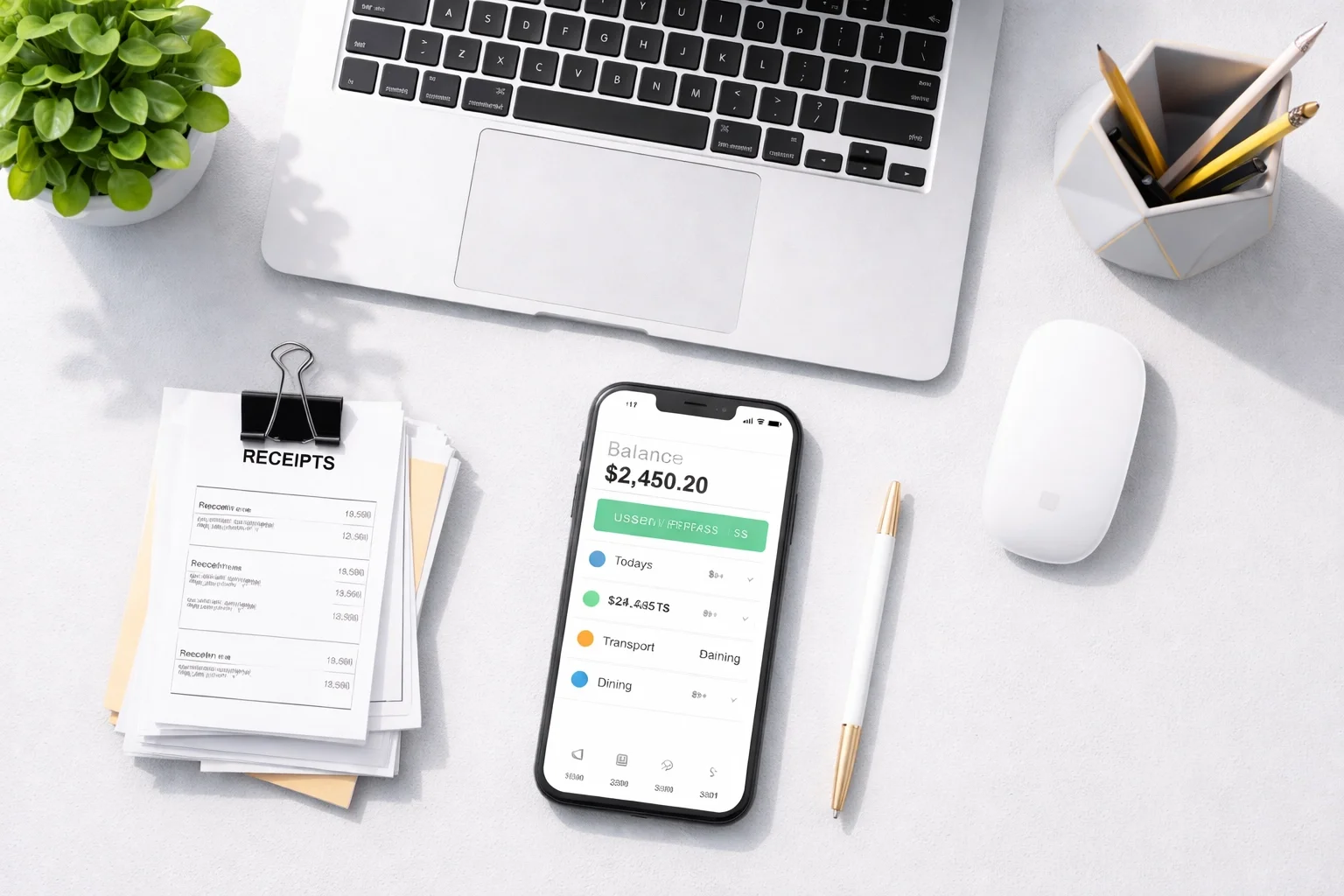
If your current "expense management system" involves a shoebox, a folder on your desktop called "Receipts Maybe," or the hope that your credit card statement will be enough for the IRS: we need to talk.
Modern expense tools let you:
- Snap receipt photos on the go
- Automatically match receipts to transactions
- Set up approval workflows for team expenses
- Create spending rules and alerts
Dext, Expensify, and Ramp are all solid options here. Many integrate directly with your accounting software, so expenses flow right into your books without any manual entry.
Time saved: 1-2 hours/month
Choosing the Right Tools for Your Business
Not every business needs the same tech stack. Here's a quick guide to what we typically recommend based on where you are in your journey:
| Business Type | Recommended Stack | Key Automation Focus |
|---|---|---|
| Sole Proprietor / Freelancer | QuickBooks Online (Simple Start) + Stripe | Automated Invoicing & Simple Expense Tracking |
| Small Team (2-10 Employees) | QuickBooks Online (Essentials) + Gusto + Dext | Payroll Sync & AI-Powered Receipt Categorization |
| Growing Business (10+ Employees) | QuickBooks Online (Plus) + Bill.com + Ramp | Full A/P Automation & Corporate Spend Management |
The key is choosing tools that integrate well with each other. A disconnected tech stack creates more work, not less.
At High Point, we're platform-agnostic: we work with whatever tools make sense for your business. You can learn more about our approach on our Technology & Workflow page.
The Implementation Game Plan
Feeling overwhelmed? Don't be. You don't have to automate everything overnight.
Here's a simple 30-day plan:
- Week 1: Connect your bank accounts and credit cards to your accounting software.
- Week 2: Set up auto-categorization rules and start using receipt scanning (like Dext).
- Week 3: Create invoice templates and set up recurring invoices for regular clients.
- Week 4: Evaluate payroll automation options and implement if needed.
Start with the biggest time-wasters first (usually data entry and categorization), then layer in the other automations over time.
When to Bring in the Pros
Automation is powerful, but it's not magic. Software can categorize transactions and pull in data, but it can't:
- Catch errors in your chart of accounts
- Advise you on tax strategy
- Ensure you're compliant with changing regulations
- Provide the financial insights you need to grow
That's where having a real bookkeeping partner comes in.
At High Point Accounting & Advisory, we help small businesses implement the right automation tools AND provide the ongoing oversight to make sure everything stays accurate and audit-ready. We handle the setup, the monthly review, and the strategic guidance so you get the time savings of automation with the peace of mind of professional support.
Ready to Reclaim Your Time?
Those 10+ hours a month aren't just about efficiency: they're about freedom. Freedom to focus on growth. Freedom to step away from the laptop on Sunday night. Freedom to run your business instead of being buried in it.
If you're ready to stop drowning in manual bookkeeping and start working smarter, let's talk.
Schedule a Free Consultation
We'll help you identify the biggest automation opportunities for your business and create a plan to get you there.
Get Started TodaySee how we can Support You Toward Your Financial High Point