
You launched your first ad campaign. Traffic picked up. Then you checked your billing statement and saw charges that don't match what you authorized, or worse, charges you can't explain at all.
You reach out to support. You get a templated response that doesn't address your actual issue. You reply. You wait. You get another generic message. Days pass. The charges stick. And somewhere along the way, you start to feel like you don't matter because your budget isn't six figures.
Here's the truth: your marketing spend is an investment, not a line item you're lucky to have. Whether it's your first hundred dollars or your tenth thousand, you deserve accountability. And when a platform reneges on that accountability, you have more power than you think—you just need a playbook.
Why Every Dollar of Ad Spend Matters
Let's get one thing straight: if you're a small business owner pushing for growth, you're probably not paying yourself what you want yet. You're reinvesting every dollar back into the business, trying to build momentum. That means even a small billing error isn't "just" a small billing error—it's money you could have used for inventory, payroll, software, or literally keeping the lights on.

The platforms know this. They also know that small accounts are less likely to fight back because the process is exhausting by design. But here's what they underestimate: small business owners are scrappy, persistent, and really good at documenting everything. You didn't build a business by giving up when things got hard.
Red Flags That Support Is Stalling (Not Solving)
Before we get into the playbook, let's talk about how to spot when you're being slow-walked instead of helped. Watch for these patterns:
- Templated or AI-generated replies that don't reference your specific situation, account details, or the evidence you sent. If the response could apply to literally anyone, it's not a real response.
- Blame-shifting. "That's handled by another department." "We don't control billing; you'll need to contact your bank." "This is a third-party issue." When everyone points fingers and no one owns the problem, you're being passed around intentionally.
- No access to a decision-maker. You're told repeatedly that the support agent "understands your frustration" but can't actually do anything. And when you ask to speak to someone who can make decisions, you're told that's not possible.
- Endless delays with no resolution timeline. "We're escalating this." "We'll get back to you soon." "Thanks for your patience." Weeks pass. Nothing changes.
- Keyword relevance is off. It’s not just about what they charge—it’s what they show your ads for. If you run a restaurant and your ads are showing up for “skydiving,” that’s a sign the platform isn’t delivering on its targeting promise, and it needs to be documented.
If you're seeing two or more of these red flags, it's time to stop playing by their rules and start using yours.
The Small Business Playbook for Billing Disputes
This isn't about being aggressive. It's about being strategic and impossible to ignore. Here's the step-by-step approach that moves the needle when support is stonewalling.
1. Document Everything (And We Mean Everything)
Take screenshots of every charge, every campaign setting, every communication, and every billing statement. Create a timeline document that shows when the issue started, when you reported it, and every response (or non-response) you received.
If there's a discrepancy between what you authorized and what you were charged, document both. This isn't paranoia—this is evidence. And evidence is leverage.

2. Communicate in Writing with Clear Demands and Deadlines
Stop relying on phone calls or chat windows that disappear. Put everything in writing via email or a support ticket system that creates a paper trail. State your issue clearly, reference your documentation, and make a specific ask: a refund, a billing correction, account credit, or whatever resolution you're seeking.
Then add a deadline. Deadlines create urgency. Without one, your request sits in a queue forever. "I need a resolution or a call with a decision-maker by [specific date]" is much harder to ignore than "please help when you can."
3. Require a Decision-Maker on Any Call
If they offer a call, that's progress, but only if the person on the other end can actually fix your problem. Before you agree to the meeting, ask: "Will the person on this call have the authority to approve a refund or billing correction?" If the answer is no, push back. You're not interested in another round of "I'll escalate this."
Make it clear that you're happy to have a productive conversation, but only with someone empowered to resolve the issue.
4. Know the Rules Around Call Recording
In some states, you can record a phone call as long as one party (you) consents. In others, you need to notify the other party and get their consent. Check your state's laws before you record anything. If you're in a two-party consent state, start the call with: "Just so you know, I'm recording this call for my records." Most reps will continue, and if they don't, that's useful information too.
Even if you don't record, tell them you're taking detailed notes and will follow up with a written summary.
5. Insist on a Written Post-Call Summary
After any phone conversation, send an email that recaps what was discussed, what was promised, and what the next steps are. Something like: "Thanks for the call today. To confirm, you stated that [X] would happen by [date], and I should expect [Y] as the resolution. Please reply to confirm this summary is accurate."
This does two things: it creates accountability, and it prevents the "that's not what we said" problem later.

6. Escalate Strategically (and Signal You're Serious)
If you're getting nowhere with frontline support, it's time to escalate, but do it visibly. Copy a legal contact (even if it's just your business attorney or a trusted advisor) on your emails. Reference your documentation and your previous attempts to resolve this.
You're not threatening, you're showing that you're organized, you're not going away, and you have people in your corner. That shifts the cost-benefit analysis on their end.
7. Export and Back Up All Account Data
Before things escalate further, export everything you can from your account: campaign data, billing history, communication logs, and analytics. If the platform restricts or suspends your account, you'll still have your records. This protects you legally and practically.
The Credit Card Protection Move
Here's a piece of advice that can save you a massive headache down the road: whenever possible, use a credit card for ad spend instead of ACH or direct debit from your checking account.
Why? Because credit cards offer an extra layer of consumer protection. If you dispute a charge with your credit card company, they can issue a chargeback while they investigate. That means the money comes back to you while the issue is being resolved, not the other way around.
With ACH, once the money leaves your account, getting it back is much harder. You're at the mercy of the platform's refund process, which (as we've established) might be intentionally slow.

Yes, some platforms charge a small processing fee for credit card payments. Pay it. The protection is worth every penny.
Where to Escalate When Internal Channels Fail
If you've followed the playbook and you're still being ignored, it's time to go external. Here's where small businesses actually have power:
- Your bank or credit card issuer. File a dispute for the incorrect charges. Provide your documentation. This is especially effective if you used a credit card.
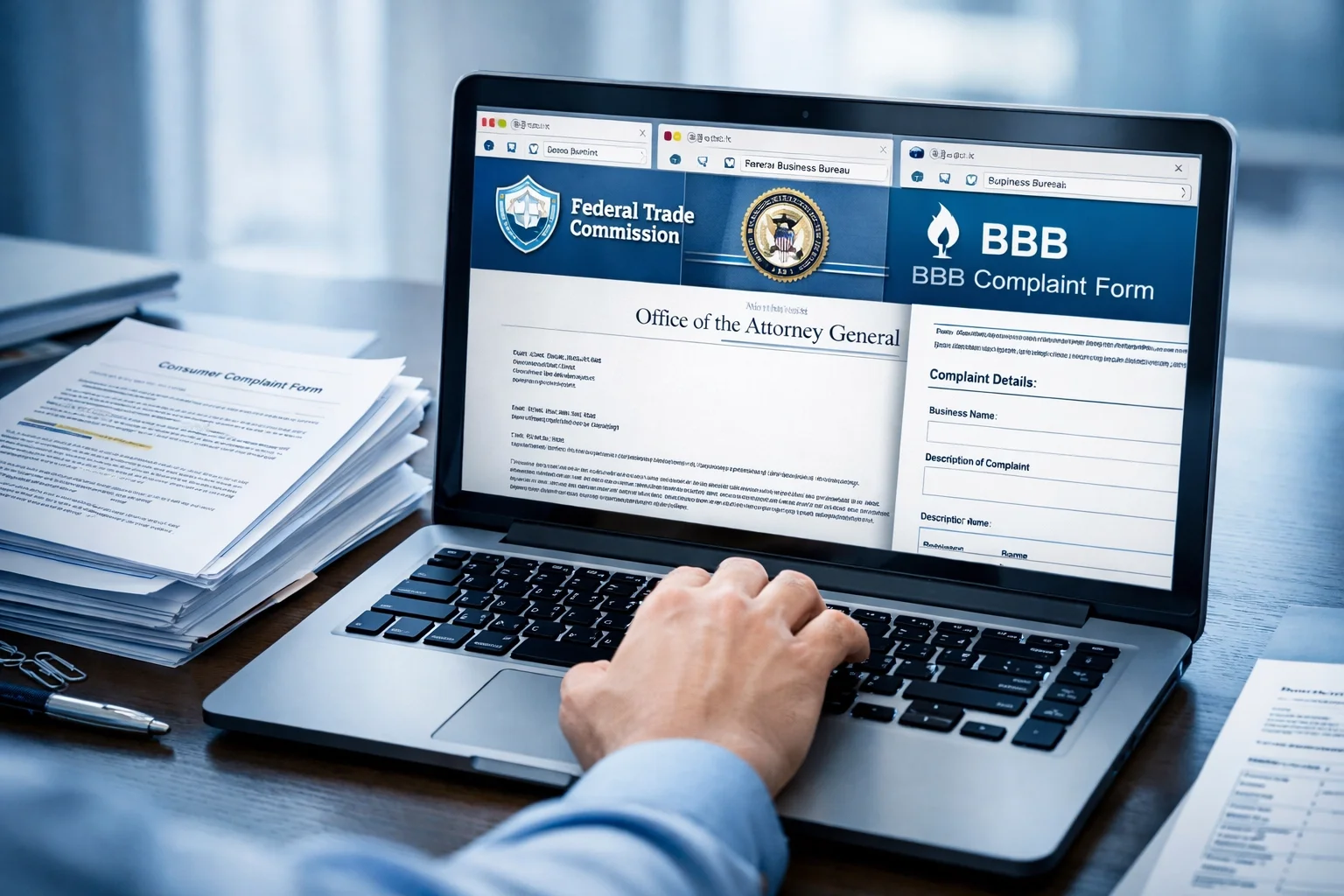
- The Federal Trade Commission (FTC). File a complaint at ReportFraud.ftc.gov. The FTC tracks patterns of deceptive or unfair business practices. Your individual complaint might not trigger action, but if hundreds of small businesses report similar issues, it gets attention.
- Your State Attorney General's Consumer Protection Office. Most states have a division that handles consumer complaints against businesses. A single complaint might prompt an inquiry: and companies don't like dealing with AGs.
- Better Business Bureau (BBB). While not a government agency, a formal complaint creates a public record and sometimes moves the needle.
None of these options are quick fixes, but they're part of building a public record. And sometimes, the act of telling a platform you've filed complaints is enough to get someone's attention.
The "Good Faith" Hold: Keep Your Public Narrative in Reserve
You might be tempted to blast the company publicly on social media immediately. That's a valid option—but it's also your last card to play.
If you go public too early, the company can point to that and say you're acting in bad faith or damaging their reputation, which can hurt your case. Instead, keep your public narrative in reserve. Let them know (in writing) that you're prepared to share your experience but you're giving them a final opportunity to resolve it first.
This isn't about being nice: it's about strategy. You're showing you're serious without burning your leverage too soon.
Don't Let "Exhaustion Tactics" Win
Here's what platforms are counting on: that you'll get tired, give up, and move on. That you'll decide it's not worth the fight.
But here's what they underestimate: small business owners are built different. You didn't start a business because you were afraid of hard things. You did it because you saw a gap, you had a vision, and you were willing to do whatever it took.
Protecting your marketing budget: and holding platforms accountable: is part of that. It's not about being difficult. It's about refusing to be treated like you don't matter just because your budget is smaller.
Every dollar you spend is an investment in your growth. And every time you push back against unfair practices, you're not just protecting your business: you're making it a little bit easier for the next small business owner who runs into the same wall.

Your Financial High Point Starts with Protecting What You've Built
At High Point Accounting & Advisory, we work with small business owners every day and we hear the horror stories. We even have some ourselves. You should know, you are not alone in any of it. Chances are, if it's happening to you...it's happening to others. Do a quick search and see if there are any past or ongoing class action lawsuits.
While we are not lawyers, we can help organize the financial side of your business so you have everything in order for all scenarios. Because your business deserves more than templated responses and endless delays.
